

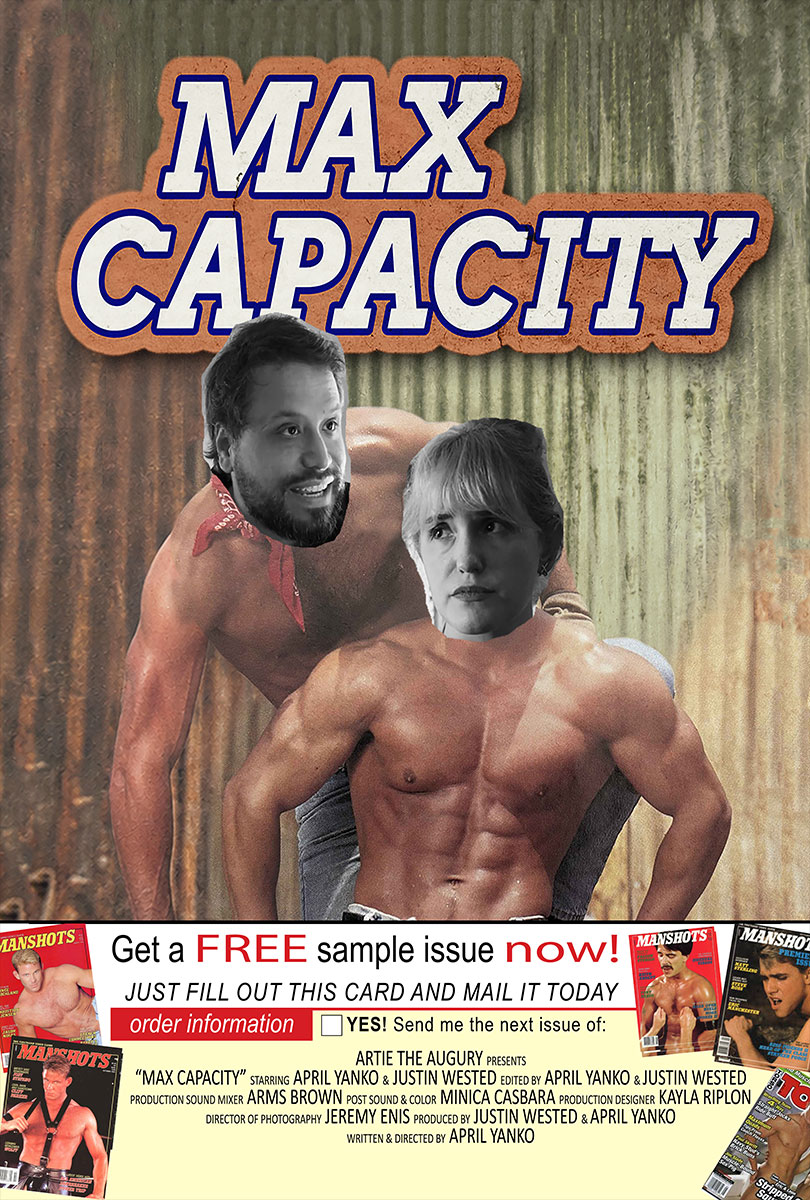
Max Capacity
Written and Directed by April Yanko
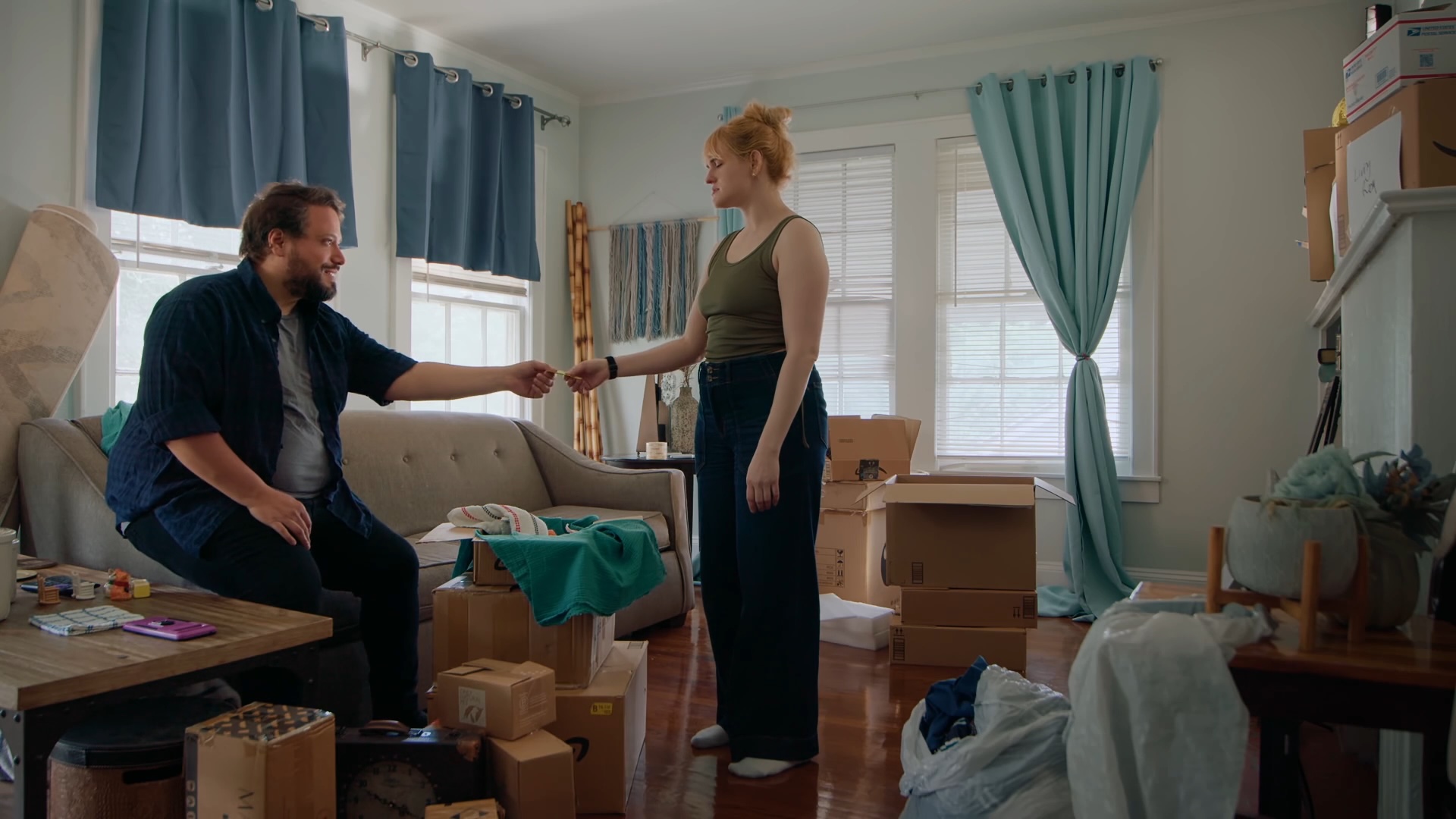
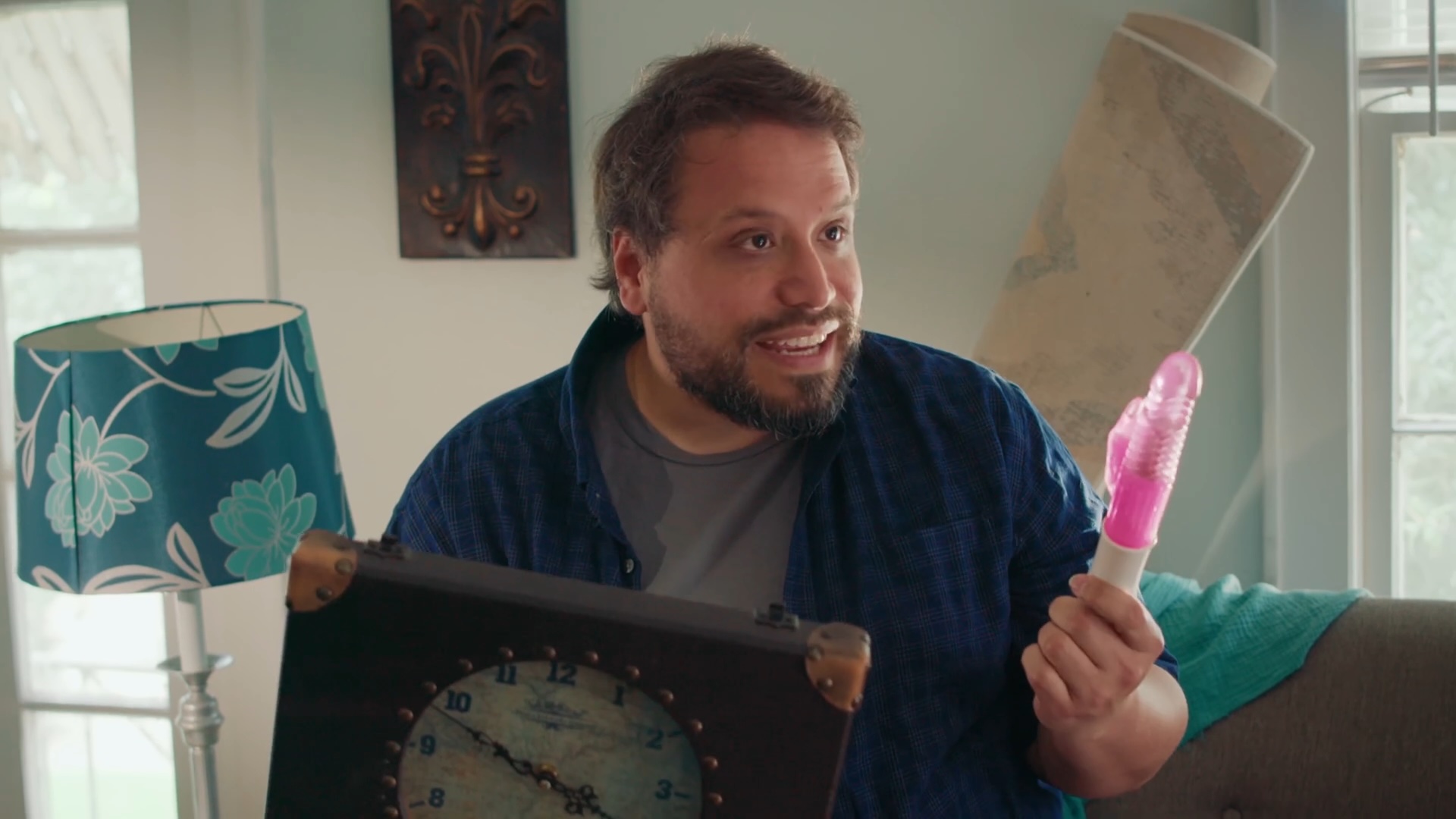
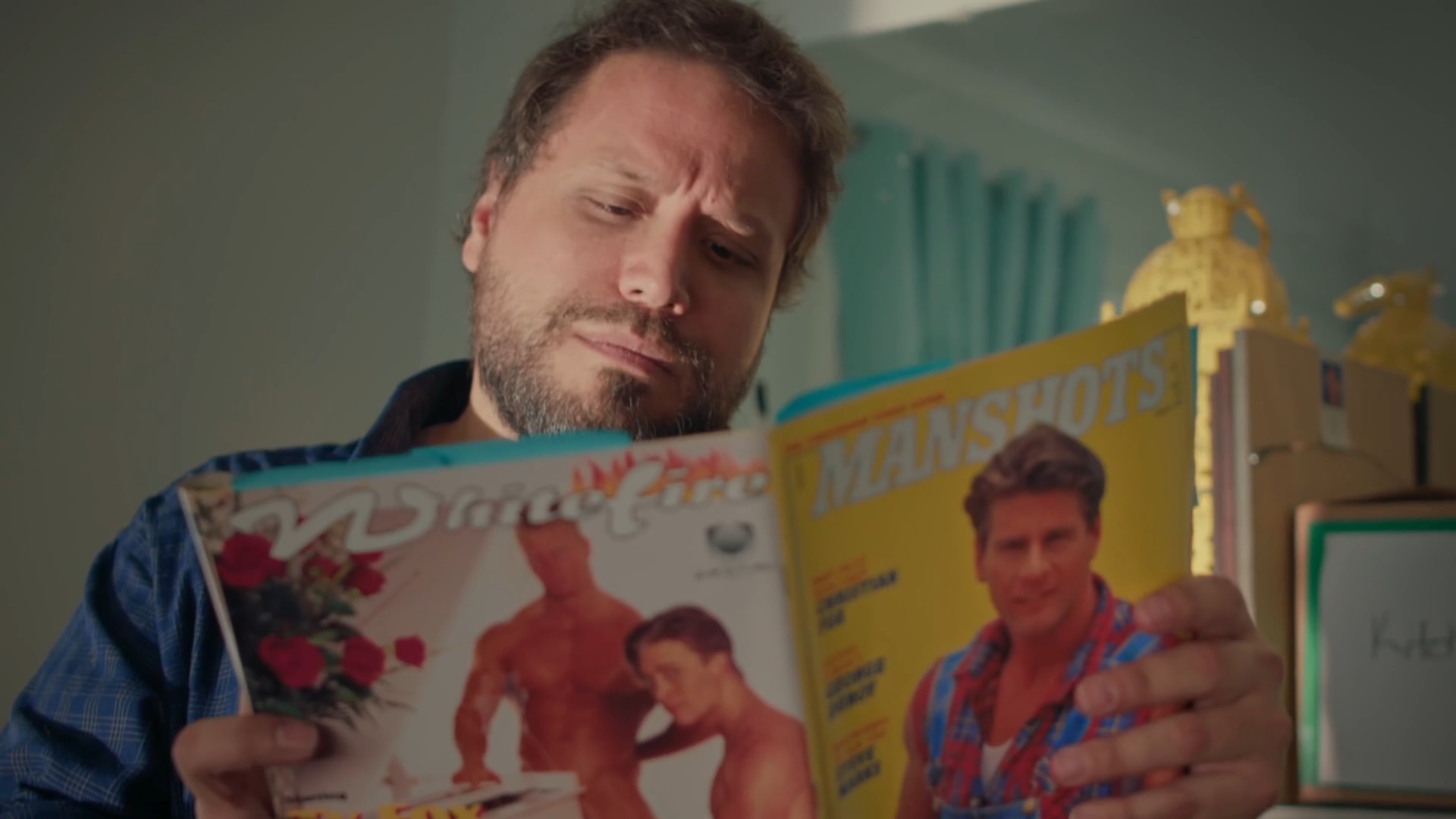
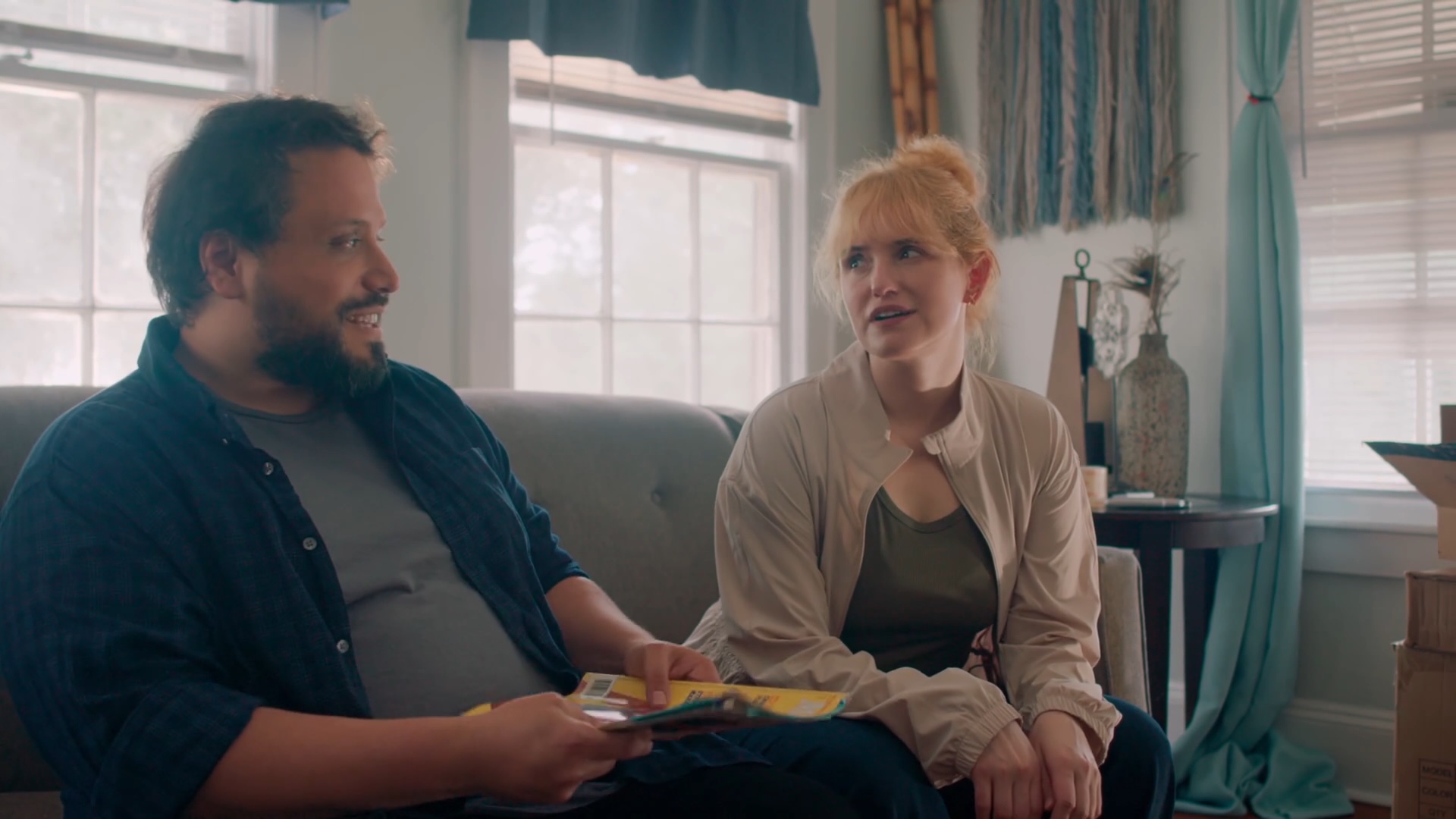
While packing up her family home, a woman and her boyfriend discover her dead dad’s nude centerfold.
Best Performance Nomination:
Produced by April Yanko, Justin Wested
Starring April Yanko, Justin Wested
Cinematography by Jeremy Enis
Edited by April Yanko, Justin Wested
Music by Bright Light
About the Filmmaker
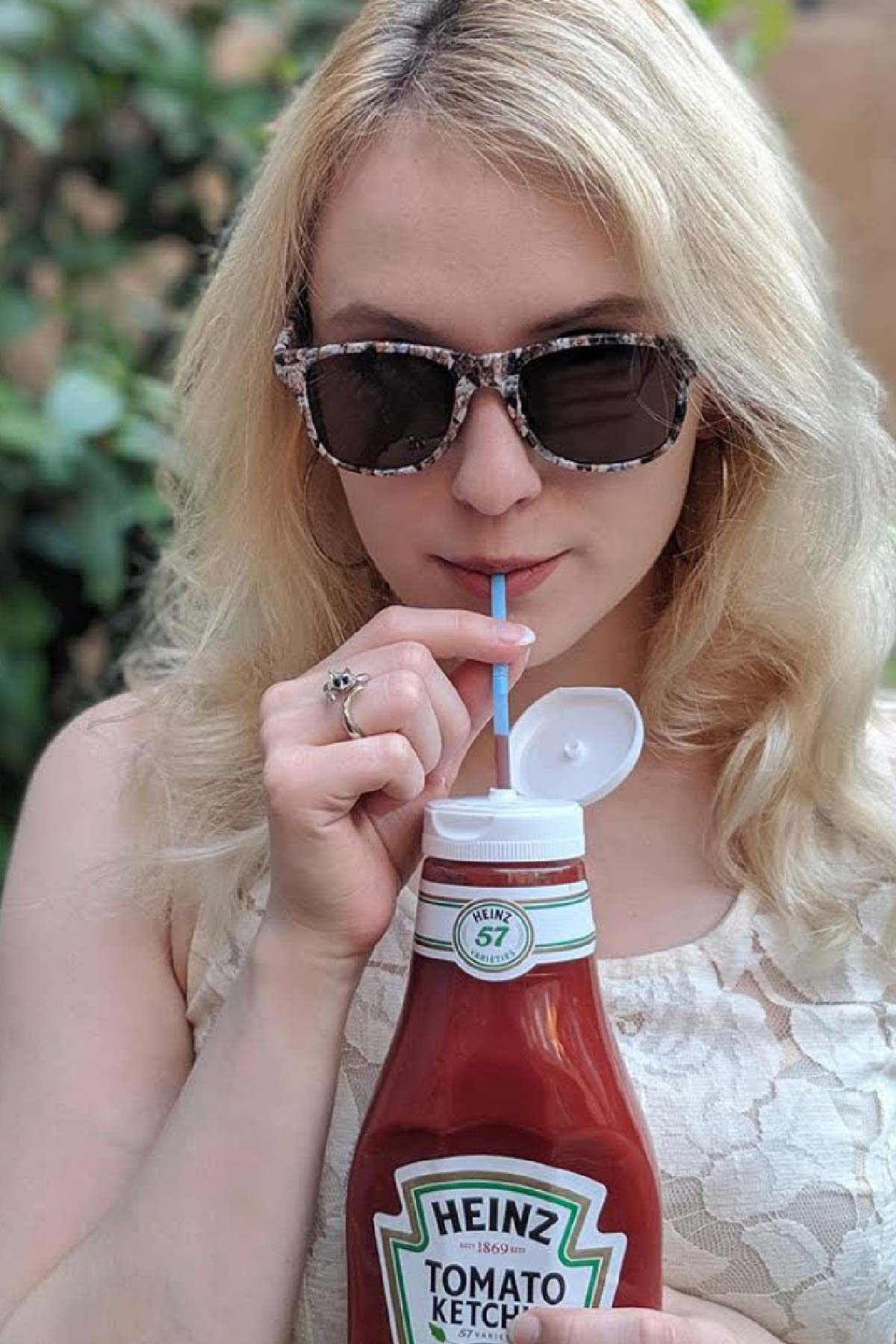
April Yanko
April Yanko is a filmmaker whose work pairs irreverent, lowbrow humor with dry, self-aware wit to make the uncomfortable something you can laugh at instead of turn away from.
Her short Butt Stuff debuted at Dances with Films at the TCL Chinese Theatre, and her films have since screened at Austin Revolution, Broad Humor, and GenreBlast. Most recently, she screened a short film at the Cannes Film Festival’s Short Film Corner through Filmapalooza’s curated selection process, and is a 2026 finalist for Louisiana Film Prize. Her debut film, “this is a garden,” was noted for its ‘authentic and sincere LGBTQ+ storytelling,’ and her work tends to live somewhere between heartfelt and super-effing weird.
She’s studied sketch writing and improv at UCB and the Pack Theater under Sam Brown (Whitest Kids U’ Know), Keisha Zollar (Astronomy Club), and Eric Moneypenny (Eric Andre, Midnight Show), among others. April performed on the Pack sketch house team “Kickball” and writes the comedy Substack “Ferret with a Knife.” You can also catch her starring in The Party, a D&D webseries on YouTube.
All of her Neopets are alive and well.
Film Trailer
Filmmaker Interview
Coming Soon
Director's Statement
(Unfortunately) based on a true story, Max Capacity begins with a discovery that I would have been perfectly happy going the rest of my life without making.
While packing, I find my mom’s sex box + a nude centerfold of my deceased father. On its face, that’s the joke; there are few events more immediate-therapy-inducing than finding these two things. But what interested me even more, and what ultimately made me want to turn my experience into a film, was everything that came after the initial urge to gouge my eyes out.
Growing up, we tend to experience our parents mostly through the role they play in our own lives. They’re “Mom” and “Dad,” not “Pam” and “Max.” While we intellectually know they had lives before us, it still feels like those lives began somewhere around the time ours did. Actually being confronted with evidence of who they were before you can be strangely destabilizing.
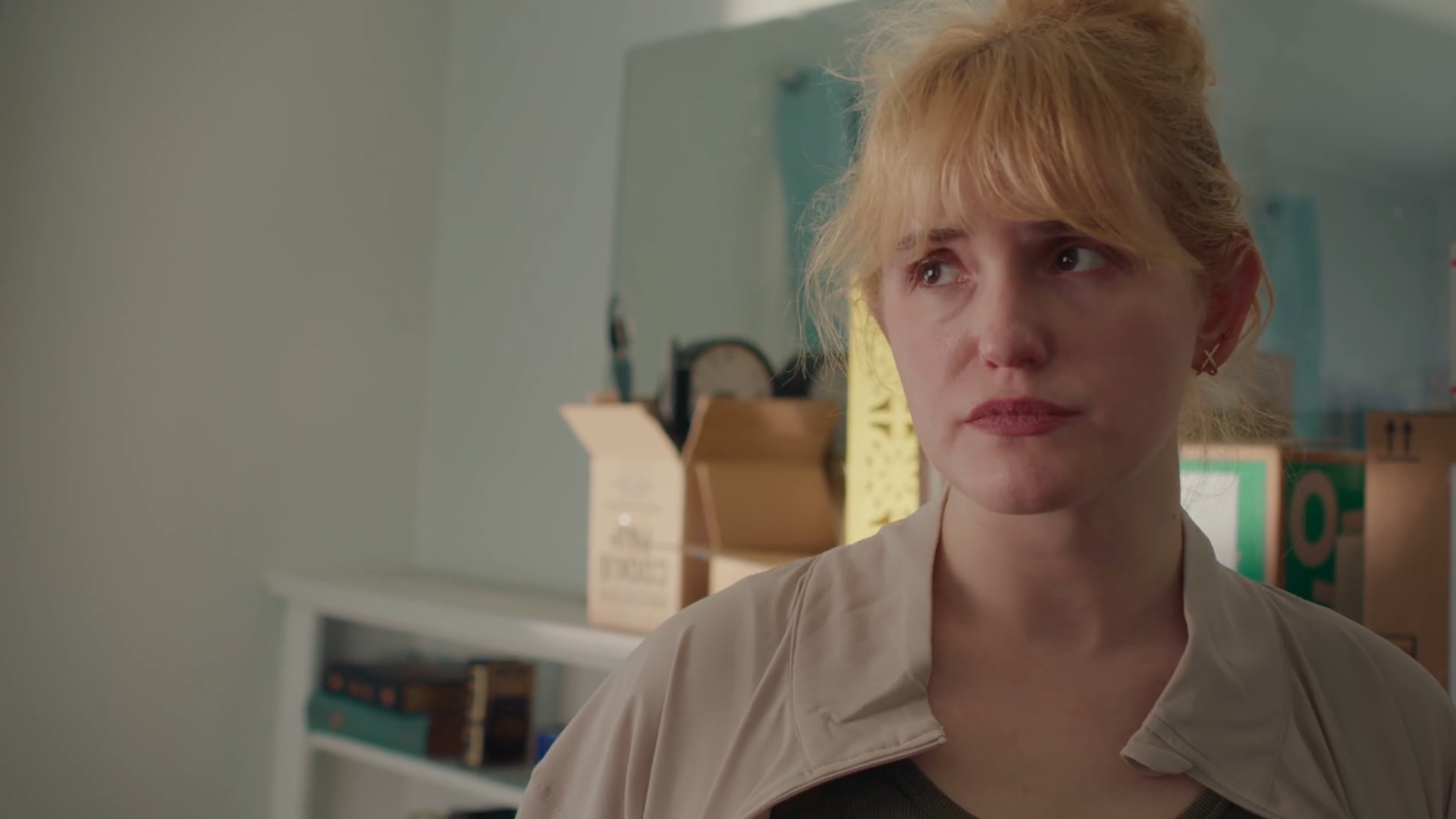
For my character, that realization is complicated by her relationship with her father. As she got older, he became increasingly critical of her, especially of her appearance and how she presented herself. Then she finds the magazine, and he’s conveniently dead and unavailable for follow-up questions. The hypocrisy is funny, but also incredibly painful. Death has made their fraught relationship permanent, but the magazine makes her understanding of him less certain.
This film isn’t about redeeming a shitty parent, because better understanding someone doesn’t erase the ways they hurt you. It’s about the unsettling realization that your parent had an entire life before you knew them, one full of desires, contradictions, and choices that you may never understand.
For me, that tension is where Max Capacity lives, between absurdity and grief. You can appreciate someone and resent them at the same time. Sometimes seeing your parent as a complete human being, regrettably, means seeing all of your parent.
— April Yanko